Last updated: August 12, 2026
Summary
- From Innovation Challenge to Commercial Deployment: Ten years after a Foresight and COSIA innovation challenge, Combustion & Energy Systems' ConDex technology has scaled from pilot to commercial deployment at Imperial Oil's Kearl site.
- Exceeding Performance & Efficiency Targets: The ConDex system surpassed its initial emission reduction expectations while providing crucial operational flexibility during natural gas curtailments.
- Environmental & Resource Co-Benefits: Recovers over 100,000 m3 of water annually and provides critical supplemental water heating options during harsh winter months.
- De-risked Phased Deployment: Scaled via a gradual rollout—starting with one unit in 2019 and expanding to six by 2022—allowing engineers to optimize performance using real-world operational data.
This cleantech pilot didn’t just work—it outperformed every single target for a decade.
Ten years ago, a simple question set off a quiet revolution in industrial energy efficiency: How do you replace the massive, energy-intensive process of hot water production at a mining site without disrupting operational economics?
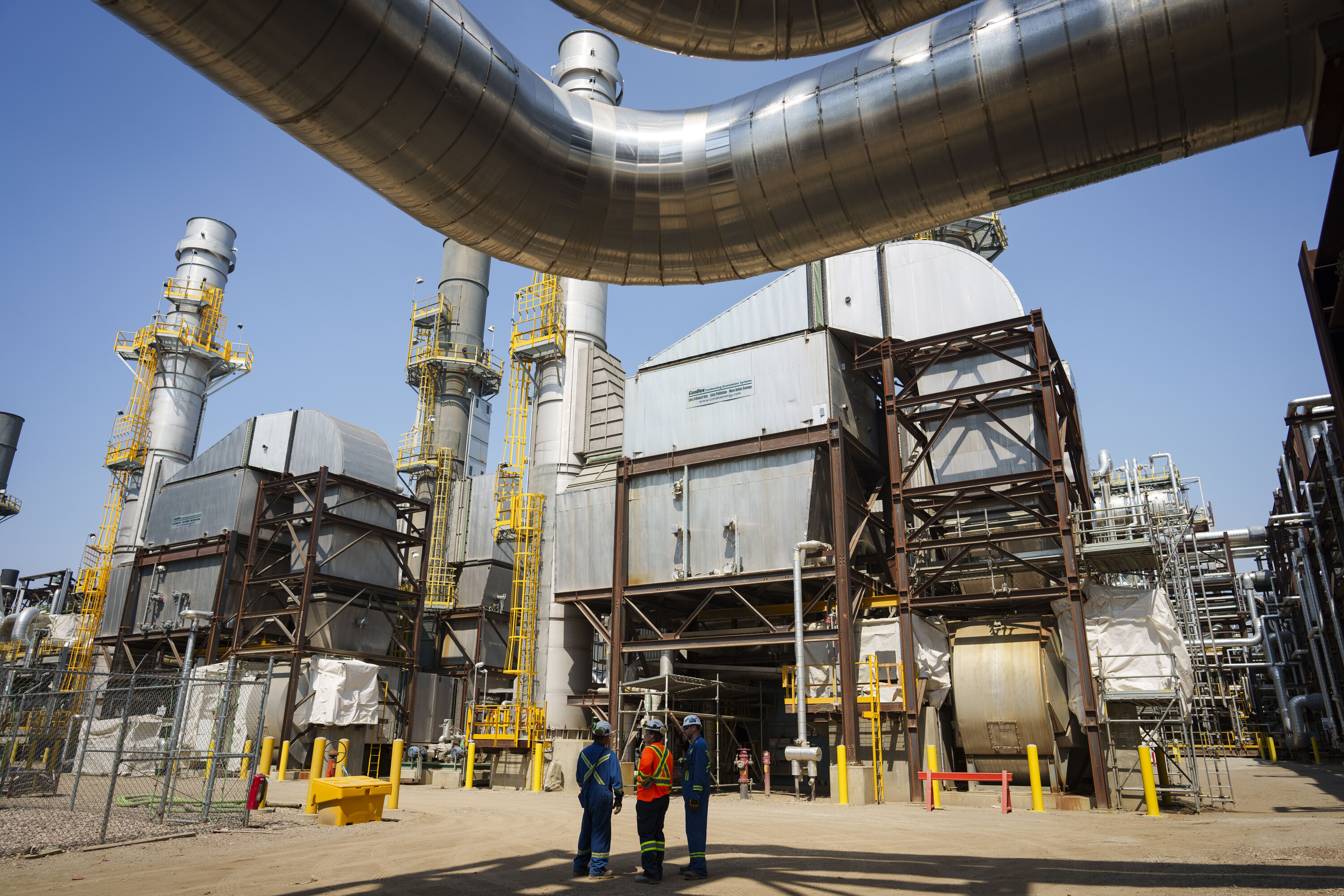
When Foresight and COSIA launched the Hot Water Production Innovation Challenge to answer that question, Ontario-based Combustion & Energy Systems Ltd. stepped up with a promising idea—capturing wasted heat straight from flue gas stacks. Today, that idea isn’t just a pilot; it’s a full-scale, multi-unit deployment across Imperial Oil’s Kearl Site, demonstrating how the adoption of clean technologies can create long-term value for Canada's industrial sector.
A decade after the initial Challenge, the verdict is in: the technology isn't just working—it’s outperforming its highest expectations.
Not only has the ConDex system consistently surpassed its target of eliminating 200,000 tonnes of CO₂e per year, but it has also provided critical operational support during fuel supply disruptions, recovered over 100,000 m³ of water annually, and provided vital winter heating.
So, how did a cleantech Innovation Challenge entry turn into a decade-long operational powerhouse? We spoke with Imperial Oil to discuss how smart staging, true collaboration, and a relentless internal champion can bridge the gap between pilot and commercial adoption.
Success was built unit by unit, dataset by dataset. Beginning with a single installation in 2019, Imperial expanded to six full-scale units by 2022, using real-time operational data from each stage to optimize subsequent deployments.
Devon Koroluk, Manager of Heavy Oil Mining Research at Imperial, attributes the project’s success to three core strategies:
- Relentless Focus: By anchoring every decision to their core mission—producing more hot water—the team prevented scope creep and over-engineering. "Do not lose track of the end goal," Koroluk emphasizes. "Remember the mission and keep driving towards it."
- Deep Collaboration: Rather than risking a mismatched pilot, Imperial’s engineers worked side-by-side with Combustion & Energy Systems Ltd. to adapt the technology. By analyzing live performance data together, the joint team continuously fine-tuned the technology with every run.
- Bespoke Over Pre-Packaged: Bypassing standard off-the-shelf options, Imperial opted to partner directly with the innovator to build a custom system. Tailoring the technology to their specific operational needs unlocked a stronger ROI, faster integration, and seamless technical alignment.
The technology is made in Canada, by an Ontario-based technology company, deployed in Alberta by a Canadian company, and supports Canadian industry. It’s a success story of Canadian collaboration and expertise.
Devon Koroluk Manager of Heavy Oil Mining Research, Imperial
In 2016, when this Challenge launched, Canadian industries, businesses, and the funding landscape looked very different. Nevertheless, Cheryl Trudell, former Climate Manager at Imperial Oil—and Canadian Cleantech Award winner—notes that the core factors driving pilot success remain true today:
- An internal champion: Devon Koroluk was a passionate champion of the project and willing to put his personal credibility on the line to advance the project through its stages of development. In fact, he told his team: “If it doesn’t work, put my name on it, but if it does work, put your name on it!”
Trudell explains: “You need a champion that will see it through to completion and has the capability, passion, and understands the technology and how it will be deployed. This was successful because we had a champion—someone who sold it.”
- The funding landscape: Trudell notes: “The internal capacity of organizations to execute large-scale technology adoption has changed—in part due to today's economic landscape. We need more partnerships like COSIA, Emissions Reduction Alberta (ERA), and Foresight to bring projects to the starting line and share the risk.”
She explains that the project’s initial funding allowed it to reach a competitive baseline, driving down costs and de-risking subsequent deployments.
“Industries need to collectively ask: How can we collaborate on solutions that move the needle for the entire sector?”
- Strategic Innovation Challenges: “Innovation Challenges remain an excellent way to source cleantech solutions—that hasn’t changed 10 years later,” Trudell highlights.
Challenge programs like Foresight’s continue to bridge the gap between heavy industry's exact operational needs and the agile tech providers ready to solve them.
A decade in the making, Imperial Oil’s experience demonstrates that major industrial decarbonization doesn’t happen by accident—it relies on proven innovation frameworks. By combining smart staging through a phased rollout, true collaboration with smaller tech innovators, and a relentless internal champion, the project bypassed the dreaded “pilot death valley” to deliver real-world impact at scale.
Programs like Foresight’s Innovation Challenges prove how targeted sourcing, rigorous vetting, and rapid deployment can solve complex operational needs, providing a scalable blueprint for the future of industrial clean technology adoption.
Discover Foresight’s Innovation Challenge case studies and launch your own.
1. What are waste heat recovery systems?
Waste heat recovery systems are designed to capture thermal energy from outputs of operational processes and return this energy directly to other processes and operations. It can create significant opex savings, and support increasing plant productivity.
2. How do waste heat recovery systems reduce GHG emissions?
Heating up water is energy intensive and typically requires natural gas boilers. Burning natural gas releases greenhouse gas emissions and is an operational expense. By recovering existing thermal energy, you can reduce your reliance on fossil sources for heating water and repurpose existing thermal energy back into your operations, thereby reducing your GHG emissions.
3. Do waste heat recovery systems support the carbon economy?
Canadian emitters are subject to various carbon pricing schemes within Canada and are charged a fee for every tonne of GHG emissions. By reducing these GHG emissions within a company’s operations, they are saving money per tonne of GHG emissions on an annual basis. This helps to support project economics and build business cases for investment.
4. What does it take to scale a cleantech pilot into commercial deployment?
Scaling a cleantech pilot requires the right technology, strong collaboration, phased deployment, and internal champions. Together, these factors help reduce risk and build confidence for commercial implementation. Programs like Foresight Canada's Innovation Challenges support this process by connecting industry with de-risked cleantech solutions to solve operational challenges.


