Last updated: November 19, 2026
Summary
- Green Manganese is turning industrial waste, mining tailings, and low-grade ores into a new source of high-purity manganese and other critical minerals.
- Its water-based, closed-loop process recycles reagents and could reduce energy use by 6 to 10 times, while cutting waste and emissions by up to 80% compared with conventional manganese processing.
- A lifecycle assessment projects an 83% reduction in emissions compared with conventional manganese alloy production, alongside potential environmental benefits such as reduced harmful contaminants and less land needed for waste storage.
- After completing Earth Tech: 2050, Green Manganese is scaling its technology, working with industrial partner ERAMET, and preparing for pilot operations and customer qualification.
Green Manganese is rethinking how the clean economy sources the materials it depends on, starting with the waste we already have.
The clean economy runs on critical minerals. Manganese, nickel, cobalt, and copper are essential to electrification, energy storage, and steelmaking. The challenge is finding how to drastically increase supply without heavily increasing the environmental impact of producing it.
Green Manganese Technologies Inc., recently named a 2026 Foresight 50 Honouree, is tackling that challenge from an unexpected direction. Instead of developing a new mine, it's focusing on low-grade ores, tailings, smelter dust, and industrial by-products that already exist.
The company is developing a water-based, closed-loop process that uses chlorides instead of conventional acids to recover high-purity manganese. Instead of burning through fresh chemicals, the process recycles them in a closed loop. This allows Green Manganese to slash energy demands by 6 to 10 times, while cutting typical waste and emissions by as much as 80%.
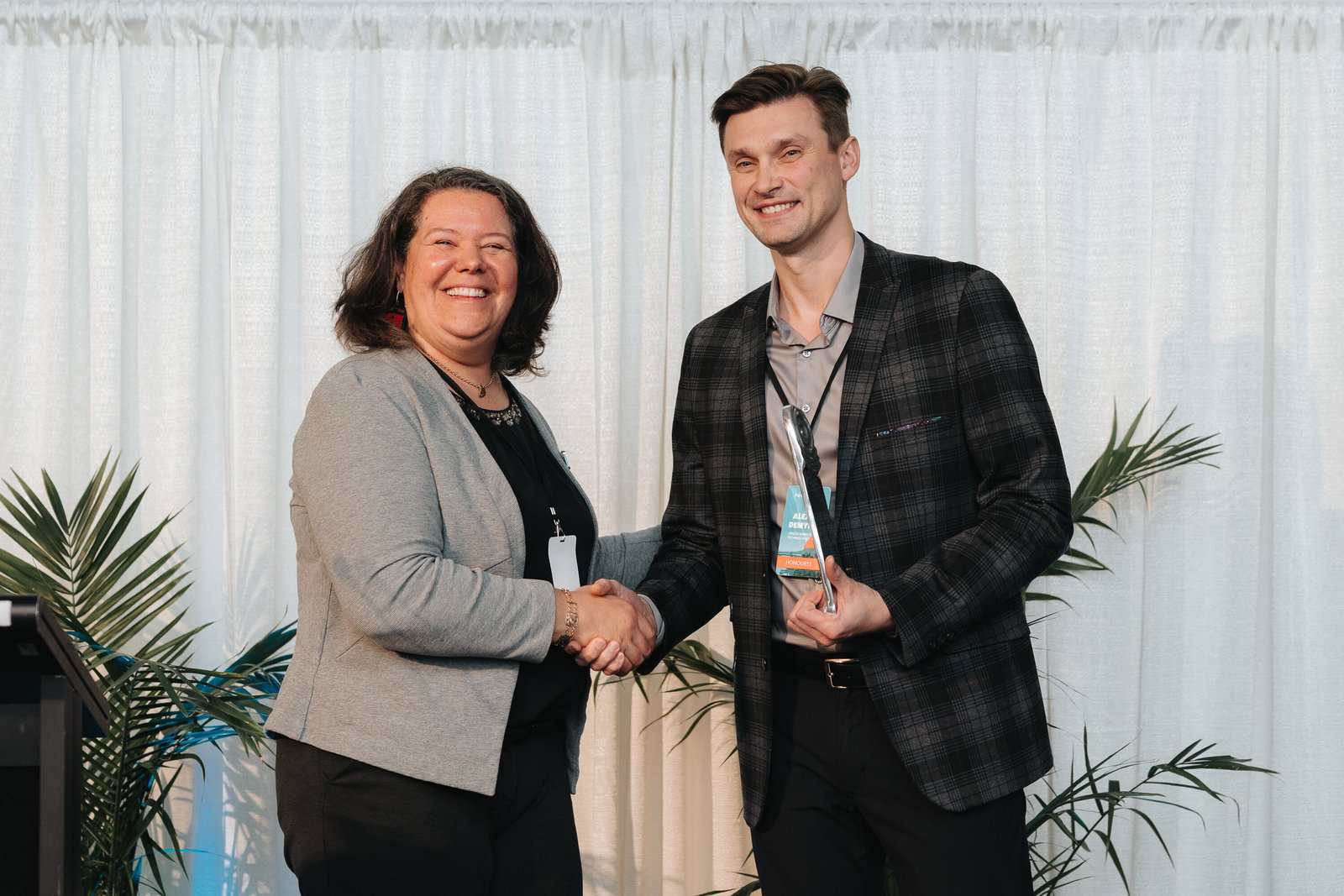
Since wrapping up Earth Tech: 2050, Green Manganese has proven the science works—now the focus is on scaling up and refining the product. Here is what that momentum looks like on the ground:
- Proven across feedstocks: Lab trials at the University of British Columbia achieved up to 100% manganese extraction across mining fines, old tailings, and furnace dust—while also unlocking valuable cobalt, copper, nickel, zinc, and potassium.
- More than just manganese: Testing on multi-metal waste recovered over 90% of nickel, cobalt, and copper alongside manganese, turning the process into a versatile platform for battery materials.
- Backed by industry: Green Manganese has signed a Proof-of-Concept agreement with ERAMET to test its process on manganese-rich industrial by-products. The project is underway and expected to wrap up by the end of 2026.
- Bigger equipment: The company has scaled its process equipment 10x from the original UBC lab system, with commissioning planned for Q3-Q4 2026. They have produced their first manganese pellets and are working toward customer qualification samples.
Our industrial system tends to view extraction and waste as separate problems. Valuable material is recovered, and what's left over is stored, managed, or remediated for decades.
Green Manganese is challenging that split. Mining and metallurgical residues often contain valuable metals. They also carry long-term environmental liabilities. The company’s closed-loop process aims to recover those metals while regenerating the water and chlorides used along the way, minimizing residual manganese in tailings and avoiding harmful by-products.
Early results point to benefits beyond carbon:
- 99% cleaner: Independent tests confirm the treatment removes nearly all toxic organic contaminants from industrial sludge.
- 1/3 the land footprint: Shrinking overall waste volume cuts long-term storage space needs by nearly three times.
The result is an opportunity to pair critical-mineral recovery with environmental remediation.
Green Manganese is already measuring its environmental payoff through a new lifecycle assessment. Modelling a full commercial plant, the numbers project just 1.0 tonne of CO2e per tonne of finished manganese—down from roughly 6.0 tonnes for traditional processing. That translates to an 83% drop in emissions, a benchmark the team plans to validate at pilot scale.
The potential is significant. Green Manganese is targeting a first commercial plant producing about 50,000 tonnes of manganese product per year, which the company projects could avoid approximately 325,000 tonnes of CO₂e annually. With multiple facilities, it estimates more than 1.6 million tonnes of annual avoided emissions by 2050.
This is also a supply chain success story. Green Manganese aims to turn low-grade resources, tailings, and industrial waste into new domestic sources of manganese for North America and Europe, supporting more resilient supply for steel and battery manufacturing. The goal is not only to make today’s manganese production cleaner, but to change where critical minerals come from in the first place. The company is building the team and infrastructure to get there.
Since wrapping up Earth Tech: 2050, the team has raised $350,000, brought on two full-time hires, and moved operations into the RecycLiCo Battery Materials Innovation Centre in Delta, BC. With direct access to advanced labs and pilot equipment, the company is prepared for its next major milestones: firing up its first pilot plant and qualifying products for customers.
Through Earth Tech: 2050, Foresight and SI Canada support climate innovators who challenge the status quo. Green Manganese is a strong example. Traditional mining writes off low-grade ores, treats tailings as liabilities, and accepts massive energy footprints as the cost of doing business. Green Manganese flips the script—turning industrial waste into critical feedstock and merging site cleanup with resource recovery.
But reshaping an industry takes more than smart chemistry; it takes capital, pilots, partners, and buyer trust. The waste and raw metals already exist. Green Manganese is proving we just need a smarter way to connect them.
Interested in connecting with Green Manganese or learning more about Earth Tech? Reach out to earthtech@foresightcac.com.
Earth Tech: 2050 and Earth Tech: Adapt are programs delivered in partnership with SI Canada and Foresight Canada, and made possible by RBC Foundation, Peter Gilgan Foundation, and Ronald S. Roadburg Foundation.
Have a groundbreaking climate solution? Learn more about Earth Tech: 2050 and Earth Tech: Adapt and how Foresight can accelerate your innovative ideas.
Earth Tech is run in partnership between Foresight Canada and SI Canada. Together, we are equipping cleantech leaders from across Canada with the tools, skills, knowledge, and connections they need to succeed. Previously, it was run for three years by the Centre for Social Innovation and SI Canada (under Climate Ventures).
We are proud to offer this program for free, every year, thanks to the generosity of our partners.


Why do critical minerals matter for the clean economy?
Manganese, nickel, cobalt, and copper are essential to electrification, energy storage, and steelmaking. Increasing supply while reducing the environmental cost of producing these minerals is a key challenge for the clean economy.
Can industrial waste be a source of critical minerals?
Yes. Low-grade ores, tailings, smelter dust, and industrial by-products can contain valuable metals that can be recovered rather than discarded. Green Manganese is developing a process to recover manganese, nickel, cobalt, and copper from these materials, creating an additional source of critical minerals.
How does industrial waste recycling reduce environmental impacts?
Recovering metals from industrial residues can reduce the volume of material requiring long-term storage and help address environmental liabilities. Independent laboratory testing of manganese-rich industrial sludge treated using Green Manganese's process showed a 99% reduction in harmful organic contaminants, while the process could also reduce associated land use by nearly three times.
How can manganese production become lower-carbon?
Alternative processing methods can reduce the energy use and emissions associated with manganese production. Green Manganese's modelled lifecycle assessment projects approximately 1 tonne of CO₂e per tonne of manganese product, compared with roughly 6 tonnes for conventional alloy production, an estimated 83% reduction that still requires validation through pilot-scale operation.
How can critical minerals supply chains become more resilient?
Recovering metals from low-grade resources, tailings, and industrial waste can create additional regional sources of critical minerals. Green Manganese aims to supply manganese to North America and Europe, supporting more resilient supply chains for steel and battery manufacturing.
Want our content to show up more often on Google?
One click and Google will surface this site in your Top Stories.